Conservation Workshop – Interventions on Two Works by Nikola Martinoski
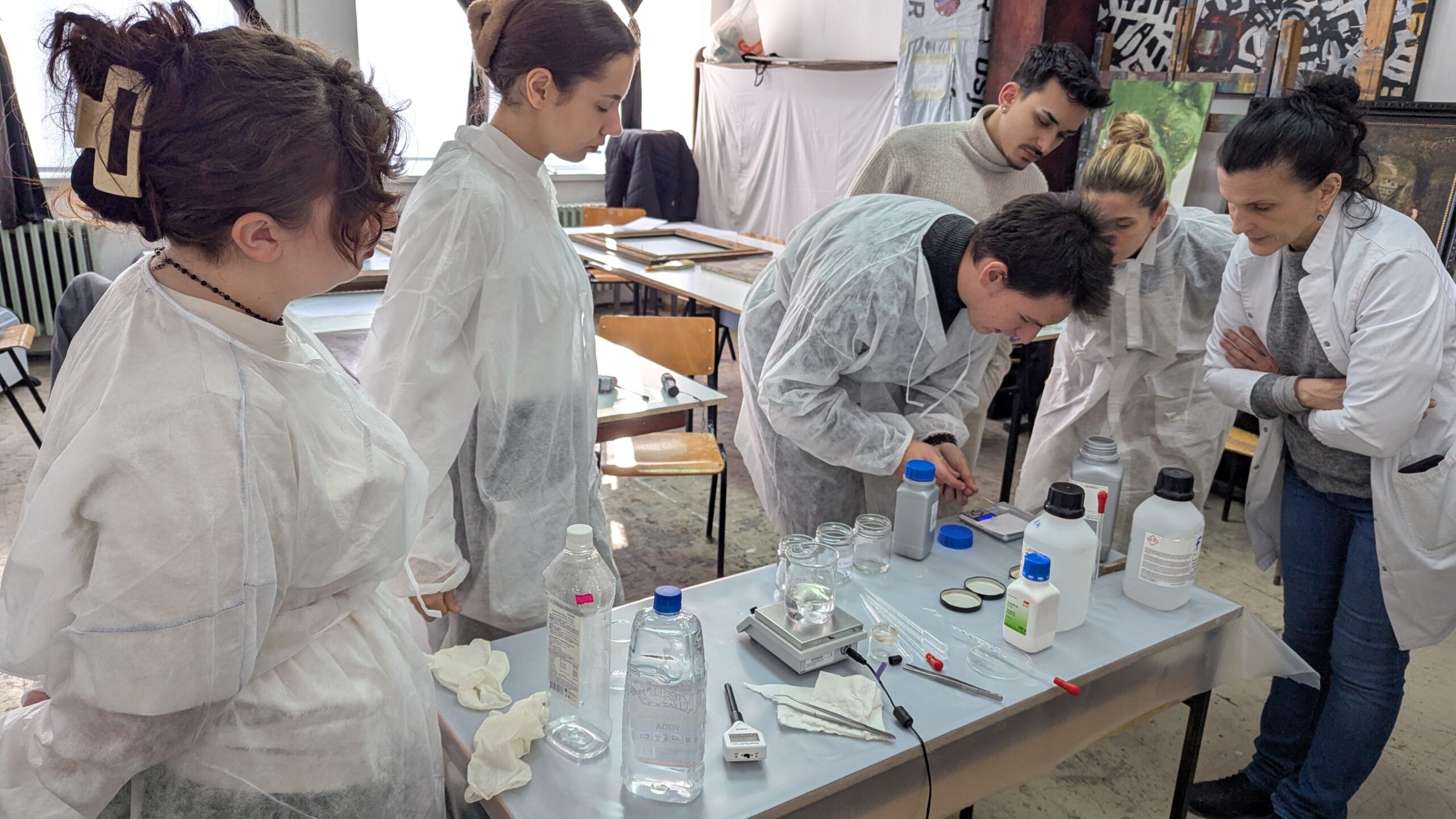
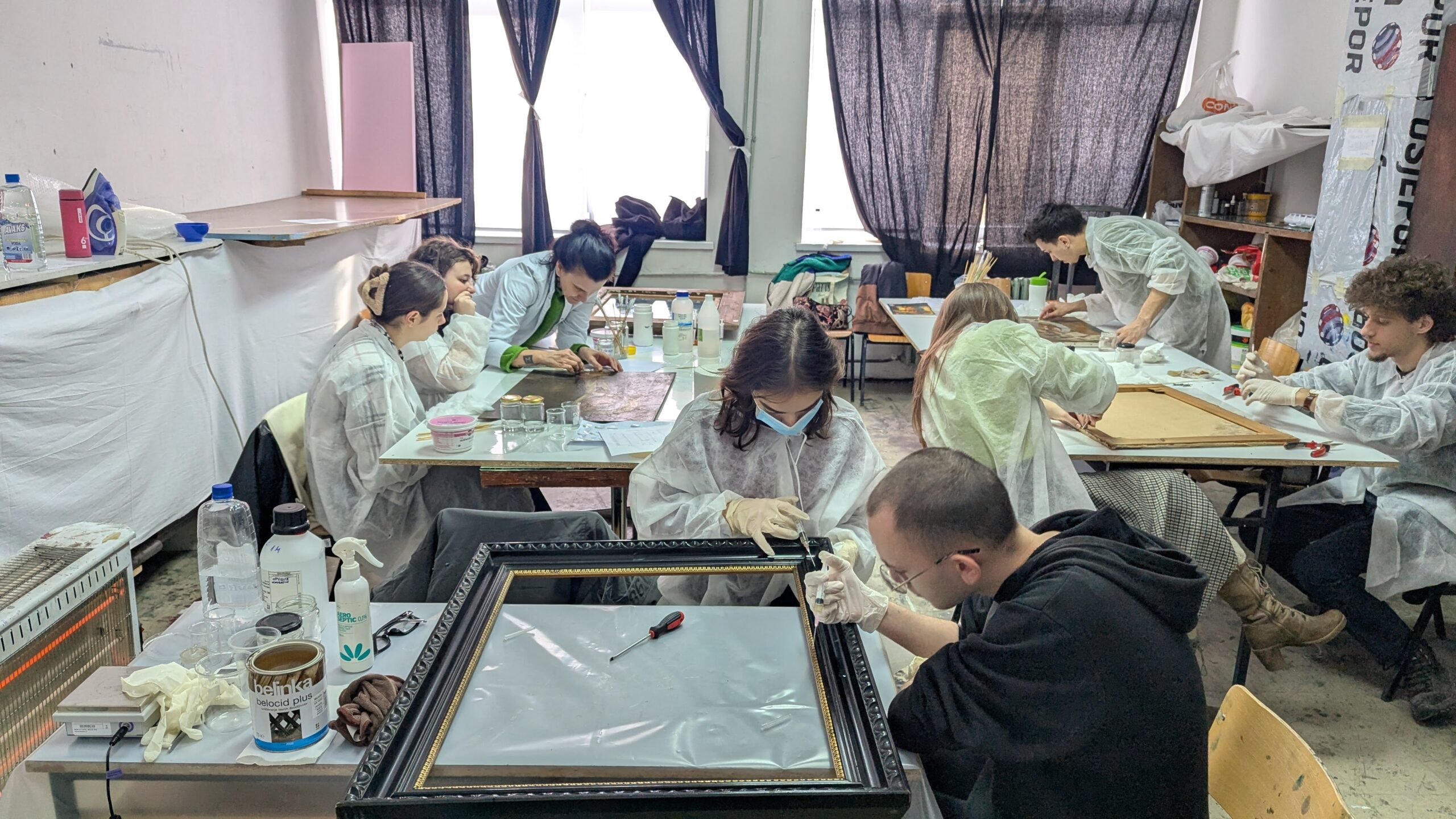
 During December 2025, within the conservation and restoration workshop “Methods of Cleaning Water-Based Works of Art (Application of Aqueous Buffers and Water-Based Solvents)”, funded through ICSSSA 2025 at Ss. Cyril and Methodius University in Skopje, the students enrolled in the course Protection and Restoration at the Department of Painting and Transmedia Practices of the Faculty of Fine Arts – Skopje, under the mentorship of Assist. Prof. Marija Sotirovska Bogdanovska, M.A., and Assist. Prof. Marijeta Sidovski, M.A., carried out professional analysis, diagnostics, and conservation–restoration treatments on two works by Nikola Martinoski.
The artworks, part of the collection of the Faculty of Philology “Blaže Koneski” – Skopje are:
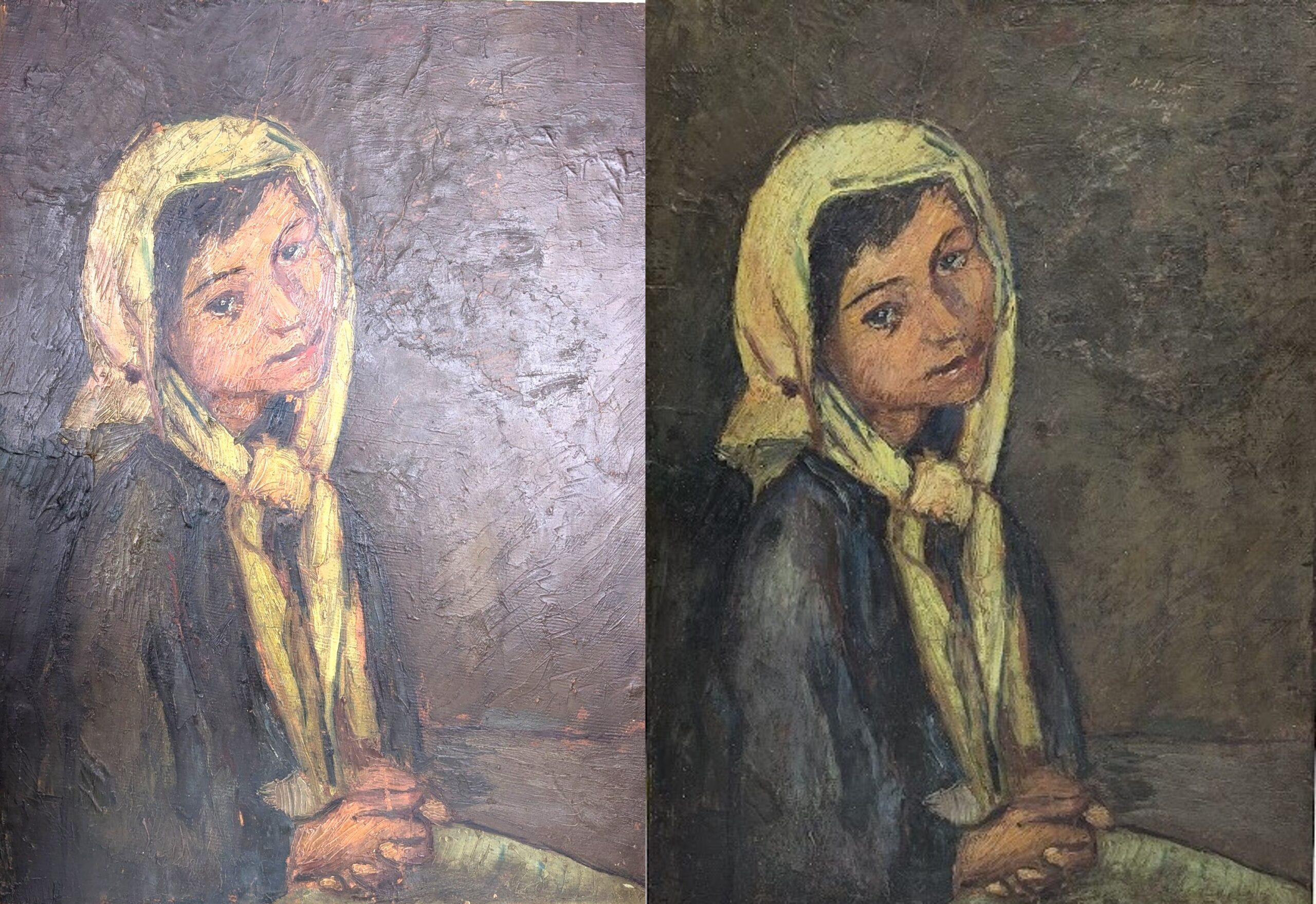
- Painting from the “Girls” cycle (oil on hardboard, 52 × 70 cm, framed 60 × 80 cm) and
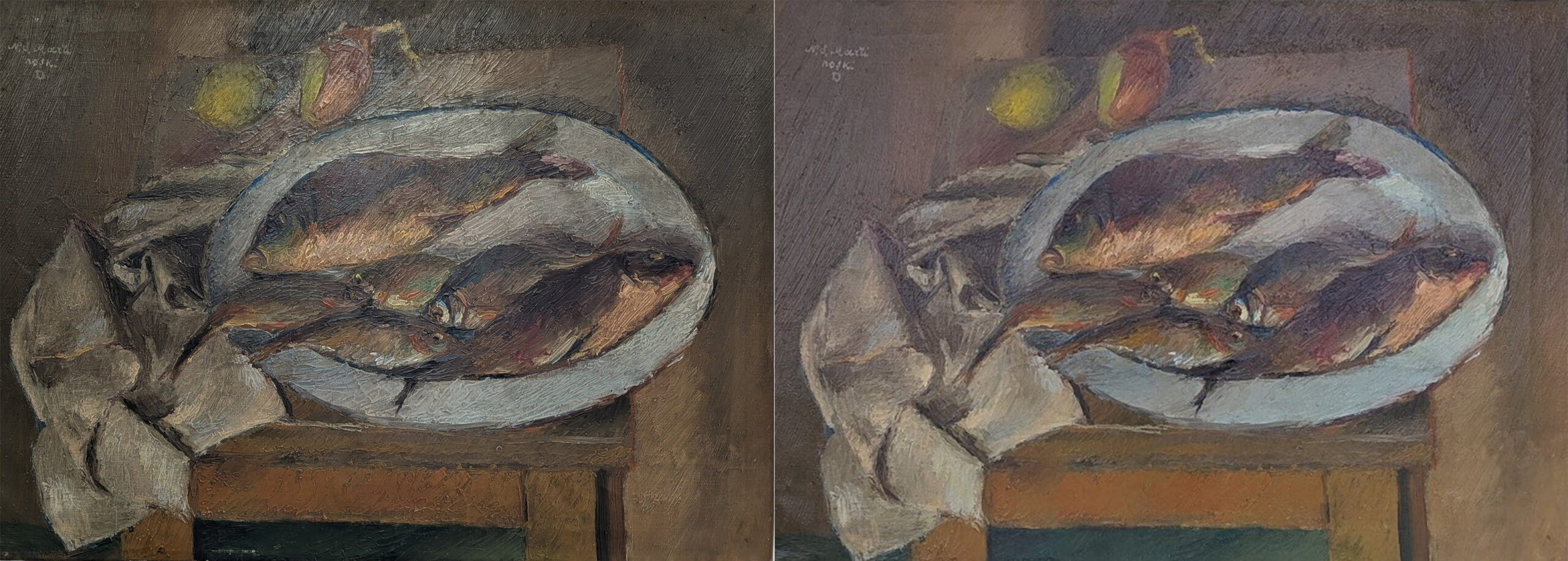
- Painting the “Still Life – Fish” (oil on canvas, 64.4 × 47 cm, framed 81.4 × 64 cm).
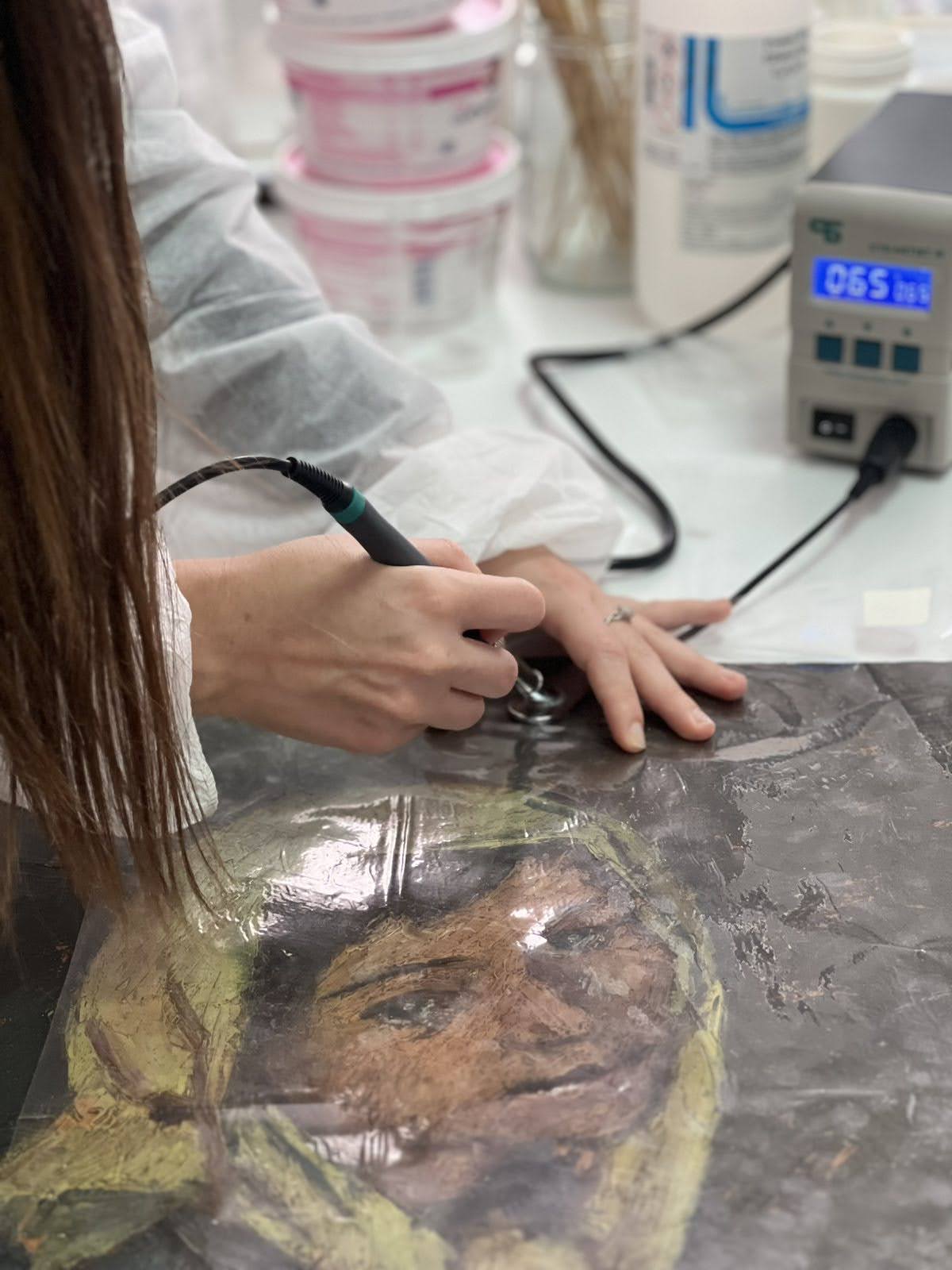
The painting “Girls” was found with traces of an old intervention, localized damages, an adhered acrylic varnish applied for glazing, surface deformations, and a yellowed protective layer. Following testing, the artwork was selectively cleaned using pH 7 + Tween and an organic solvent, the paint layer was stabilized with BEVA 371, losses were filled using a conservation-grade putty, and the retouching was carried out mimetically. The frame was cleaned, disinfected, and visually integrated using watercolor and corrective gilding.
The painting “Still Life – Fish” had accumulated dust and soot deposits, deformations in the canvas, and minor damages. Cleaning was performed with pH 7 TAC, without removing the original aged varnish. The reverse side was stabilized with a BEVA 371 film and Holytex, while the frame was cleaned, disinfected, and visually harmonized.
The workshop represents a significant contribution to the development of the students’ professional competencies as future conservators and restorers, providing them with practical experience in real working conditions, using authentic artworks and contemporary methodologies. At the same time, the activities highlight the importance of creating improved conditions and continuous support for the systematic care, research, and long-term preservation of artworks as part of our cultural heritage.

 Blvd. "Goce Delchev" no. 9, 1000 Skopje, Republic of North Macedonia
 ukim@ukim.edu.mk
 3293-293